What Size Air Source Heat Pump Do I Need for My Home?
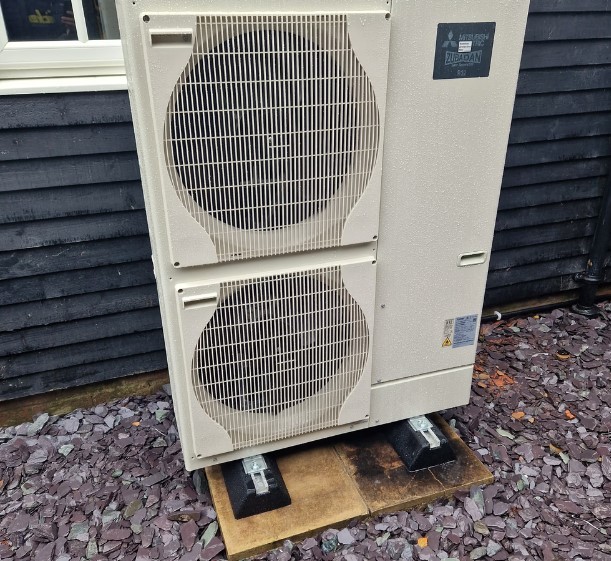
Transitioning to an air source heat pump (ASHP) is a significant step toward decarbonising your UK home, but the success of the system hinges on one critical factor: getting the size right. Unlike a traditional gas boiler, which is often ‘oversized’ to provide quick bursts of intense heat, a heat pump must be precisely matched to the specific thermal demands of your property to operate efficiently.
Choosing a unit that is too small will leave your home chilly during a February cold snap, while a unit that is too large will short-cycle, turning on and off frequently and wasting expensive electricity. By understanding how kilowatt (kW) ratings relate to your home’s insulation and layout, you can ensure a comfortable living environment and lower energy bills year-round.
Decoding the Kilowatt (kW) Output
When professionals discuss the size of a heat pump, they aren't referring to its physical dimensions but its power output, measured in kilowatts. Most domestic air source heat pumps in the UK range from 4kW to 16kW, representing the amount of heat the unit can produce when working at its optimum level.
To help you understand which capacity might be most suitable for your home, here is a general guide to typical requirements:
A 4kW to 6kW unit is typically sufficient for well-insulated modern flats or small two-bedroom terraced houses.
An average three-bedroom semi-detached home usually requires a mid-range unit between 7kW and 10kW.
Larger detached properties or older, draughtier homes often need a high-capacity 12kW to 16kW system to maintain warmth.
The goal is to select a kW rating that covers your home’s ‘peak heat load’—the amount of energy needed to keep the house at 21°C on the coldest day of the year. Matching this accurately ensures the compressor runs at a steady, efficient pace rather than struggling to keep up.
The Critical Role of Heat Loss Calculations
A "rule of thumb" based on floor area is a starting point, but a true sizing exercise requires a room-by-room heat loss survey. This technical assessment looks at how much thermal energy escapes through your walls, windows, roof, and floors, providing a precise figure for the heating capacity required.
The amount of heat loss varies significantly depending on the age and construction of your property:
Newer builds with cavity wall insulation and double glazing typically lose around 40 to 60 Watts per square metre.
Period properties with solid stone walls and single glazing can lose over 100 Watts per square metre, requiring a significantly larger heat pump.
Professionals use the Standard Assessment Procedure (SAP) to calculate these losses, factoring in your local climate and altitude.
Without a heat loss calculation, you are essentially guessing your requirements. A detailed survey identifies ‘weak spots’ in your home’s insulation, allowing you to make small improvements that might enable you to fit a smaller, cheaper, and more efficient unit.
Accounting for Domestic Hot Water Demand
A heat pump doesn't just warm your radiators; it also provides the hot water for your showers, baths, and taps. The number of occupants in your home and their daily habits significantly influence the total capacity you need from your ASHP system.
When calculating your hot water requirements, your installer will typically consider the following factors:
Households with multiple bathrooms or power showers will require a larger hot water cylinder and a heat pump with enough ‘headroom’ to recover that water quickly.
If you have a large family, your installer may recommend a slightly more powerful unit to ensure that heating the home isn't interrupted for too long while the water tank is being replenished.
Modern integrated cylinders can save space, but they must be matched to the kW output of the outdoor unit to ensure consistent performance.
While the heating demand usually dictates the size of the pump, high hot water usage is the ‘tie-breaker’ that often pushes a homeowner toward the next size up. Ensuring your system can handle both tasks simultaneously is vital for a stress-free transition.
Balancing Flow Temperatures and Radiator Size
Heat pumps are designed to run at ‘low flow temperatures,’ typically between 35°C and 45°C, compared to the 70°C provided by an old-fashioned boiler. Because the water is cooler, the ‘emitters’ (your radiators or underfloor heating) need a larger surface area to transfer enough heat into the room.
To ensure your home remains comfortable at these lower temperatures, you may need to address the following:
You may need to upgrade some radiators to ‘Type 22’ or ‘Type 33’ double or triple panels to compensate for the lower water temperature.
Underfloor heating is the perfect partner for a heat pump because the entire floor acts as a giant, low-temperature radiator.
A correctly sized pump won't perform well if the pipework is too narrow, so your installer should check that your existing plumbing can handle the required flow rates.
Sizing the heat pump and the radiators together is an essential part of the design process. If your radiators are too small for the heat pump’s output, the system will become inefficient, and your rooms will never reach the desired temperature.
Why MCS Certification is Non-Negotiable
In the UK, the Microgeneration Certification Scheme (MCS) sets the standard for heat pump installations and sizing. Choosing an MCS-certified installer is not just about quality; it is often a requirement for accessing government grants like the Boiler Upgrade Scheme.
Working with an MCS-certified professional provides several key protections for homeowners:
An MCS-certified professional is legally required to provide a performance estimate and a formal heat loss calculation before installation.
They will ensure the unit is positioned correctly to meet noise regulations (MCS 020) and that your electrical supply (DNO) is notified.
Using a certified expert ensures your warranty remains valid and that the system is future-proofed for your property.
A professional survey removes the guesswork from the process. It provides you with a bespoke design that guarantees comfort, meets UK regulations, and ensures your investment pays off through lower long-term running costs.
Achieving a Perfect Thermal Balance for Your Home
Selecting the right size air source heat pump is the foundation of a successful low-carbon heating system. By moving away from the ‘bigger is better’ mentality and focusing on precise heat loss data, you can create a home that is both environmentally friendly and incredibly comfortable.
The transition requires careful planning and a ‘whole-house’ approach to energy efficiency. Invest in an accurate professional assessment today to ensure your heat pump delivers the perfect balance of warmth and efficiency for decades to come.